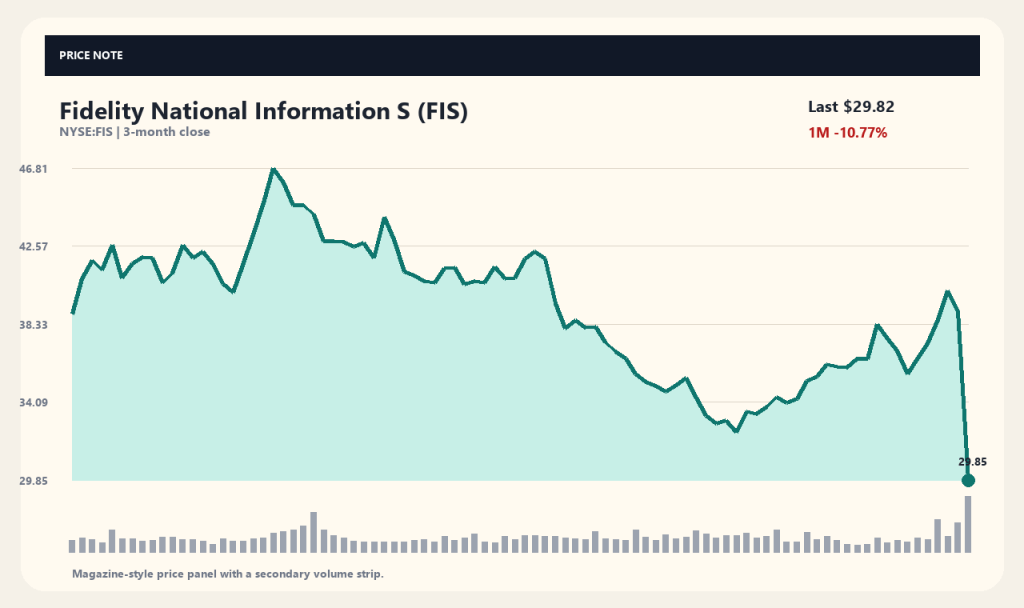
Shares of Fidelity National Information Services Inc. (FIS), a US financial technology provider, experienced heavy selling pressure recently. The stock sank 23.52% in a single session to close at $29.82, expanding its one-week decline to over 18%.
The sharp sell-off reflects company-specific headwinds rather than broad market volatility. Investors reacted strongly to a lower forward outlook and key executive leadership changes disclosed alongside the company's third-quarter earnings release.
Impact of Guidance Cut and Executive Departure
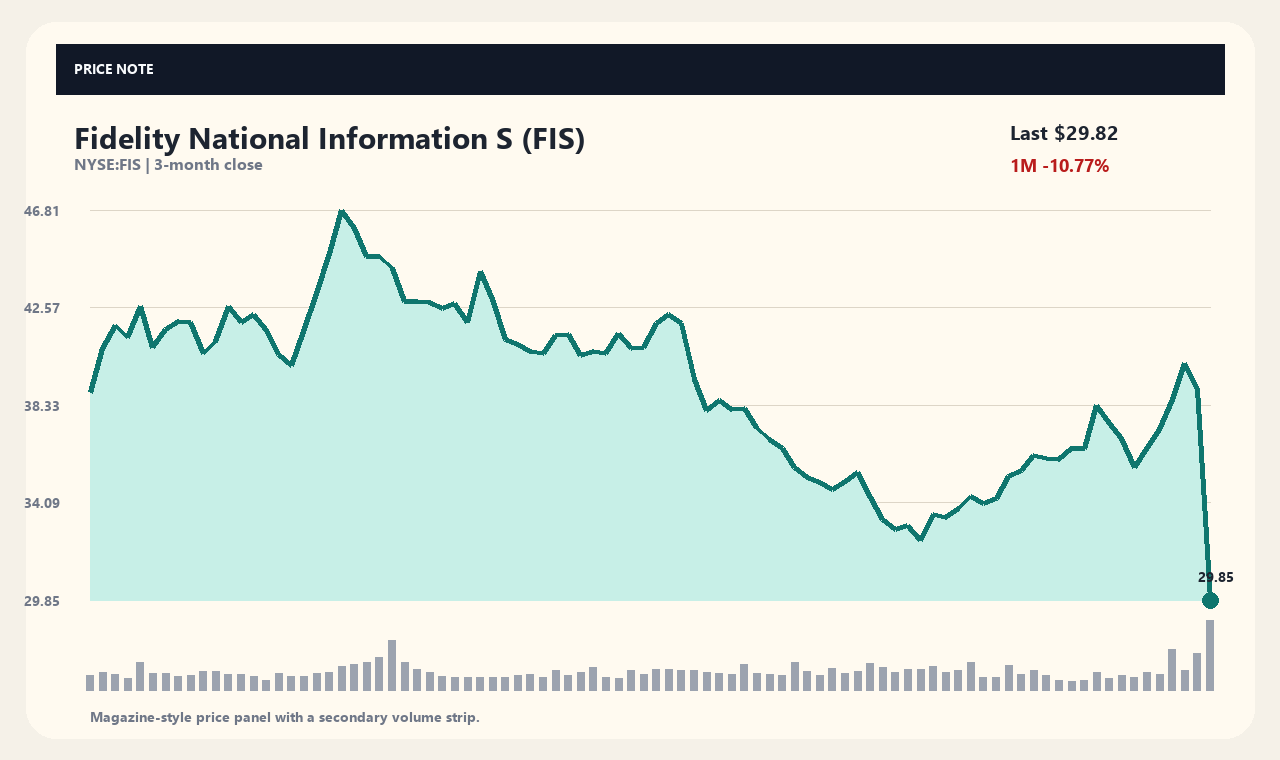
According to reports from Barron's and other financial outlets, the slump stemmed from a double hit: a revenue-warning guidance revision coupled with the sudden departure of the Chief Financial Officer. While third-quarter top-line performance held up reasonably well—supported by steady demand in banking solutions—the forward-looking changes overshadowed results.
Reduced forward guidance raised core concerns about FIS's near-term earning power. The unexpected exit of its chief financial officer further amplified uncertainty regarding management stability and operational control.
Stock Plunges Near 14-Year Lows
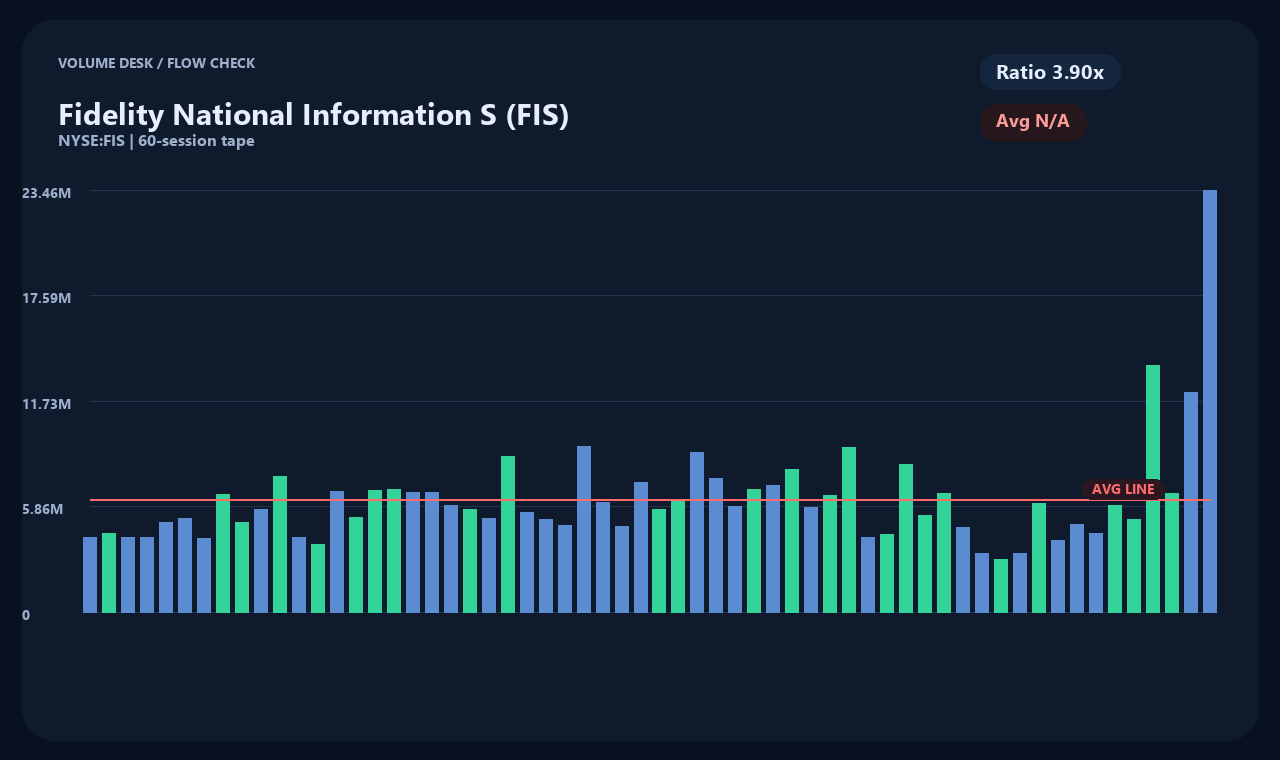
With this steep decline, FIS traded near its 52-week low of $29.22, marking its lowest valuation level in 14 years. Financial media including The Wall Street Journal noted that the stock has entered one of its deepest downturns in years.
While the sharp price drop might suggest deep-value opportunity at a glance, ongoing downside revisions to projected earnings signal potential value-trap risks if top-line momentum fails to stabilize.
Wall Street Downgrades and Market Sentiment
Reacting to the altered growth trajectory, JPMorgan downgraded FIS from Overweight to Neutral. Such rating changes from major investment banks tend to weigh further on near-term market sentiment.
Social trading platforms and investor communities echoed the confusion, debating the timing of any potential rebound. Given the stock's high institutional ownership, concerns remain regarding additional institutional selling pressure.
Business Fundamentals and Balance Sheet Signals
FIS continues to deliver core processing and payment technologies to global institutions across Banking Solutions and Capital Markets Solutions. Although total balance sheet debt remains substantial, operating cash flow and free cash flow generation remain at functional baseline levels.
Consequently, the stock collapse reflects reset growth expectations rather than an acute solvency crisis. The primary focus now hinges on whether management can deliver against its revised guidance targets.
Key Catalysts and Monitor Points Ahead
Reversing the current bearish trend requires management to execute and demonstrate tangible operating improvements. Key catalysts will include upcoming quarterly earnings reports verifying margin stabilization and adherence to revised guidance.
Rather than buying solely on lower multiples, market participants will likely look for stabilization in consensus earnings estimates and operational continuity under the new financial leadership.
As of retrieval context (2026-11-05T04:02:22): Price $29.82 USD · 1-Day -23.52% · 1-Week -18.26% · 1-Month -10.77% · 3-Month -30.34%
[Sources and Verification Timestamp]
Market data: yahoo_chart_api · Verification timestamp: 2026-11-05T04:02:22. Related news source: Zacks. Article headlines serve as verification clues; original company disclosures and regulatory filings should be independently verified.
This content is provided for informational purposes only and does not constitute investment advice or a recommendation to buy or sell securities.
This content is for informational purposes only and is not investment advice.

