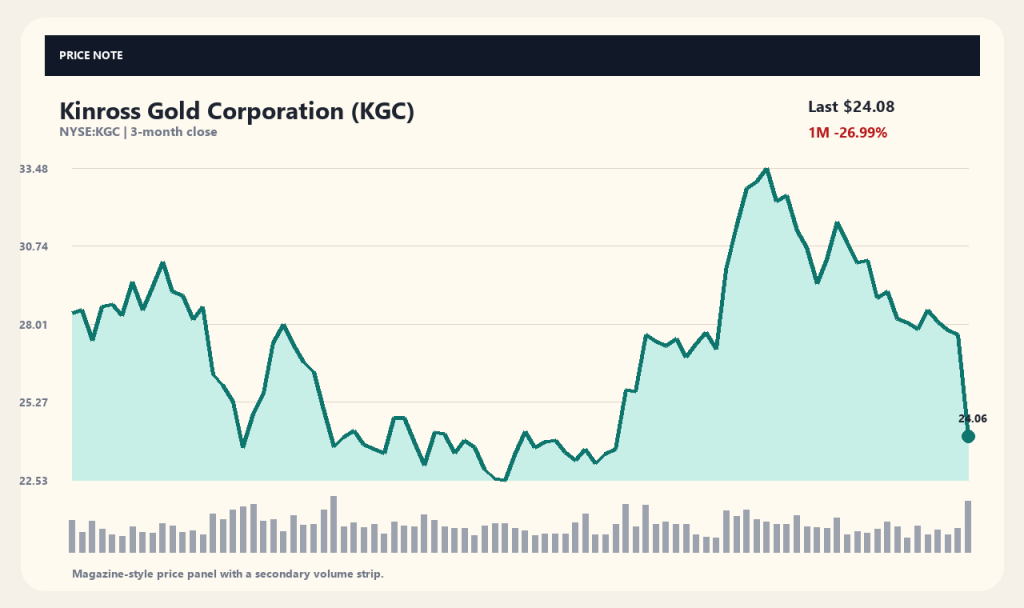
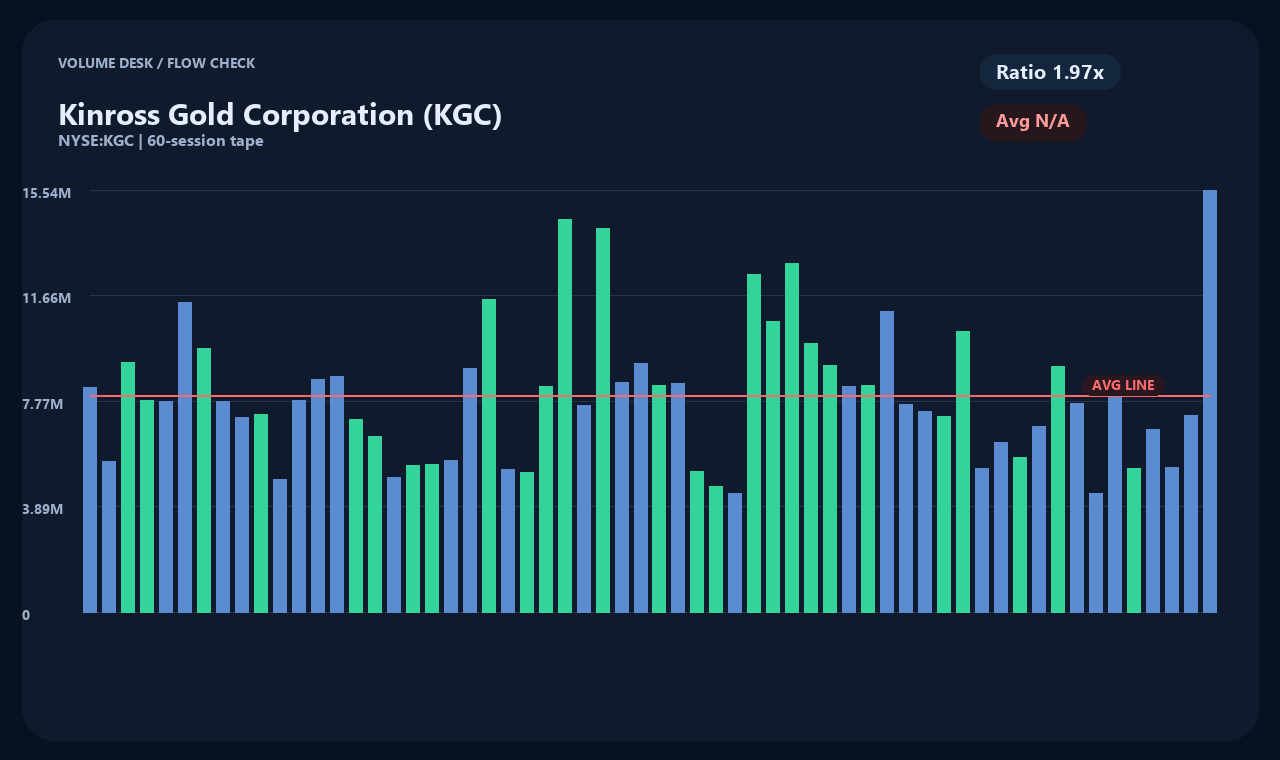
Kinross Gold (KGC) stock plummeted 12.82% in a single session to close at $24.08. Trading volume spiked to 15.41 million shares—nearly double its daily average—as investors reacted to lowered production guidance.
Wall Street responded aggressively to potential earnings drag from reduced mining output. While management introduced enhanced capital return targets to cushion the blow, the announcement failed to stem selling pressure.
Mine Setbacks Force Production Guidance Downgrade
Kinross Gold revised its 2026 and 2027 production forecasts lower. According to media reports, adverse weather and reduced recovery rates at La Coipa, alongside lower throughput at Round Mountain, drove the output cuts.
For gold miners, production volume directly dictates top-line performance. Disruptions at core assets threaten both short-term earnings and mid-to-long-term margin profiles, eroding market growth expectations.
Strategic Shift to Enhanced Capital Returns
Alongside lowered production targets, Kinross raised its shareholder return commitment to 50% of free cash flow. Management aims to preserve equity value and highlight balance sheet flexibility despite operational headwinds.
However, investors prioritized operational downside over capital return promises. Reduced gold output inherently shrinks total free cash flow, dampening the absolute dollar value returned to shareholders.
Technical Breakdown and Moving Average Compression
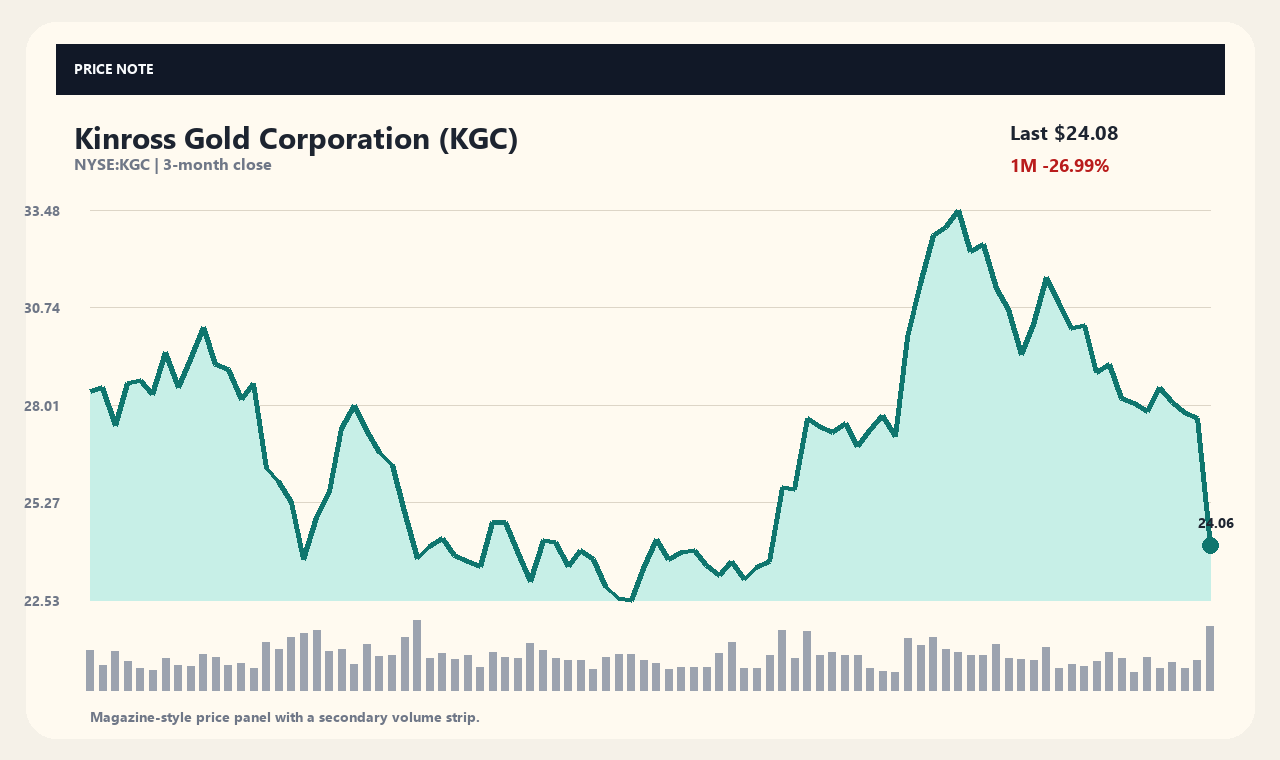
The 12.82% single-day plunge pulled Kinross's 1-month return down to -26.99%. KGC now trades 18.02% below its 20-day moving average ($29.37) and 10.18% beneath its 60-day moving average ($26.81), sitting near 12.1% of its 52-week high of $39.11.
The volume surge—1.97 times average daily levels—signals heavy institutional liquidation following the revised outlook. With prices sinking below key moving averages, overhead resistance has thickened significantly.
Balance Sheet Strength vs. Rising Unit Costs
Kinross maintains a solid financial baseline, boasting trailing revenue of $8.47 billion, net income of $3.18 billion, and cash reserves of $2.66 billion against $755.3 million in debt. Free cash flow stood at $2.99 billion.
However, output curtailments elevate fixed-cost overhead per ounce mined. Higher all-in sustaining costs threaten to squeeze operating margins, even if spot gold prices remain elevated.
Key Factors to Watch Ahead
The immediate focus shifts to operational recovery timelines at La Coipa and Round Mountain. Investors must evaluate whether recovery issues and weather impacts are temporary bottlenecks or structural cost drivers.
Additionally, free cash flow trajectory will determine whether the 50% shareholder payout pledge remains sustainable. Broader gold price trends will also act as a primary macro driver for operational realization.
Data as of (2026-09-25T04:02:27): Price $24.08 USD · 1D -12.82% · 1W -13.45% · 1M -26.99% · 3M 1.6%
[Source and Verification Time]
Market Data: yahoo_chart_api · Verified: 2026-09-25T04:02:27. Related reporting source: Proactive, Zacks, Simply Wall St. Article headlines serve as factual indicators; verify official corporate filings for primary details.
This content is for informational purposes only and does not constitute investment advice.
This content is for informational purposes only and is not investment advice.

